
MFG
MFG
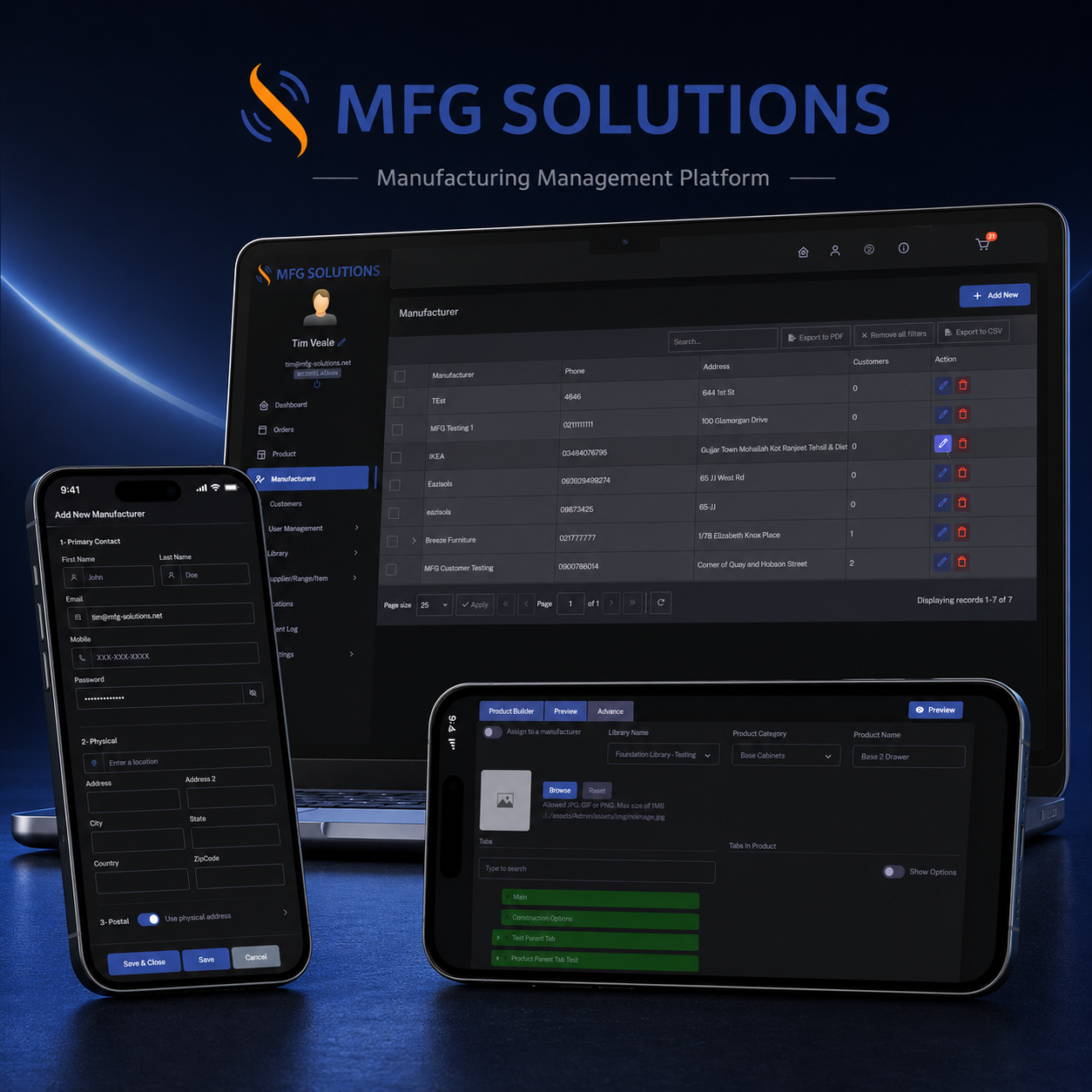
MFG Solution is a B2B manufacturing and vendor management platform developed to centralize complex product configuration, supplier coordination, order processing, inventory-related data, and administrative operations. Designed for configurable furniture manufacturing, the system replaces fragmented workflows with a structured digital environment where administrators, manufacturers, and suppliers can manage their responsibilities through dedicated access controls. The platform combines an administrative dashboard, supplier portal, reusable product libraries, configurable manufacturing options, order visibility, reporting, and granular user permissions. Its modular architecture enables manufacturing businesses to standardize product data, improve coordination, and scale operational processes more efficiently.
The client required a comprehensive business solution for managing furniture manufacturing and selling workflows involving administrators, manufacturers, suppliers, customers, and configurable products. Their operations depended on detailed product specifications, reusable materials and attributes, supplier relationships, manufacturing options, geographic controls, and different levels of system access. MFG Solution was developed as a centralized platform capable of supporting these interconnected processes without relying on multiple disconnected tools.
Challenges faced by MFG

Product information, manufacturing specifications, supplier records, and order data were distributed across fragmented systems.
Configurable furniture products required detailed dimensions, construction methods, finishes, options, and product ranges.
Repeating product attributes manually created inconsistencies and increased administrative work.
Administrators needed granular control over manufacturers, suppliers, customers, and internal users.
Suppliers required a dedicated portal for profile management, invoice submission, and order status visibility.
Different countries and markets required individual controls for modules such as orders, suppliers, manufacturers, customers, and product libraries.
Manufacturing businesses needed improved visibility into orders, supplier activities, product configurations, and operational events.
Login and sensitive forms required protection against automated submissions and unauthorized access.
Key Features
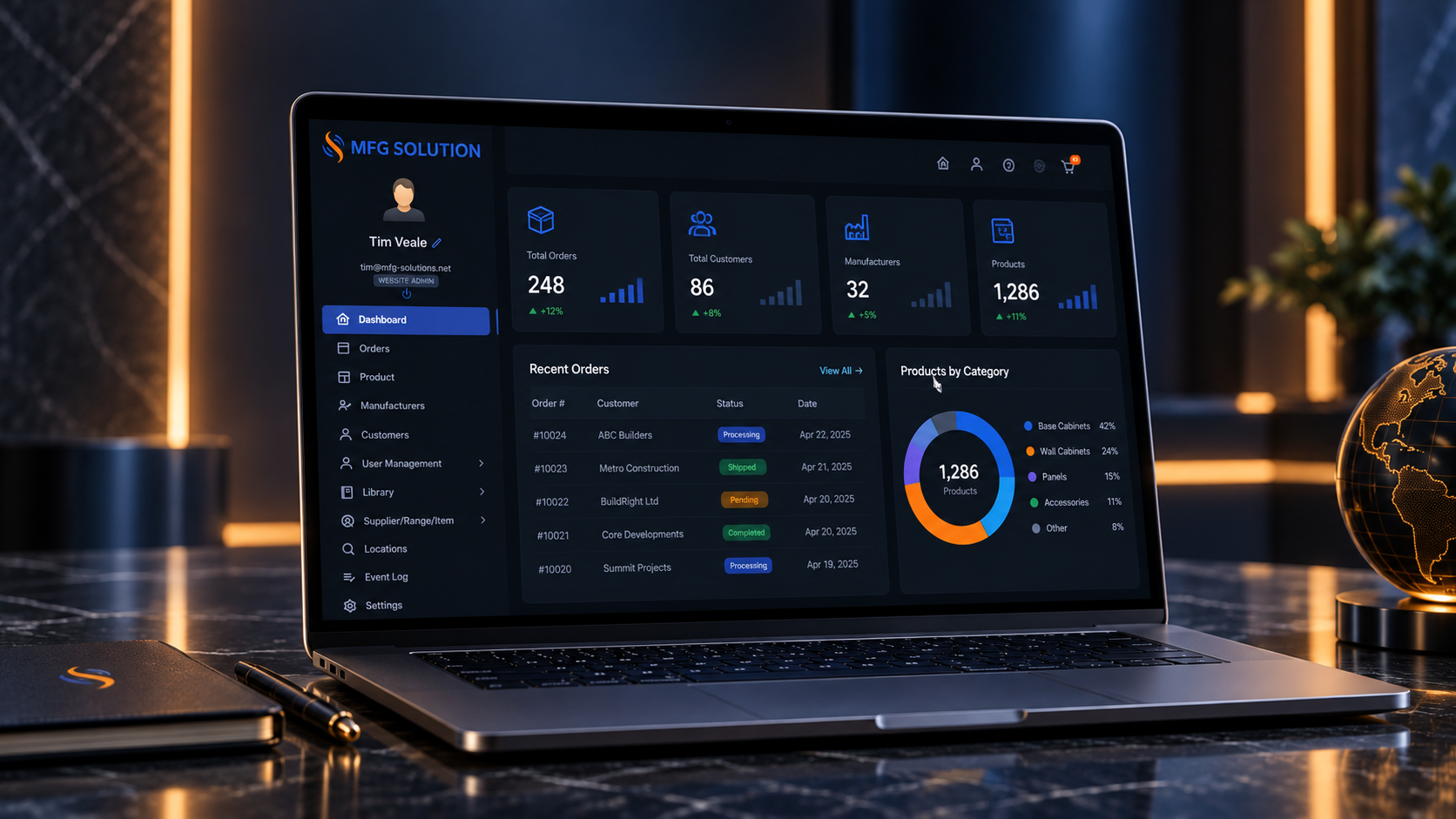
Centralized Administrative Dashboard: A unified dashboard allows authorized administrators to manage orders, products, manufacturers, customers, suppliers, users, locations, system settings, and activity logs from one interface.
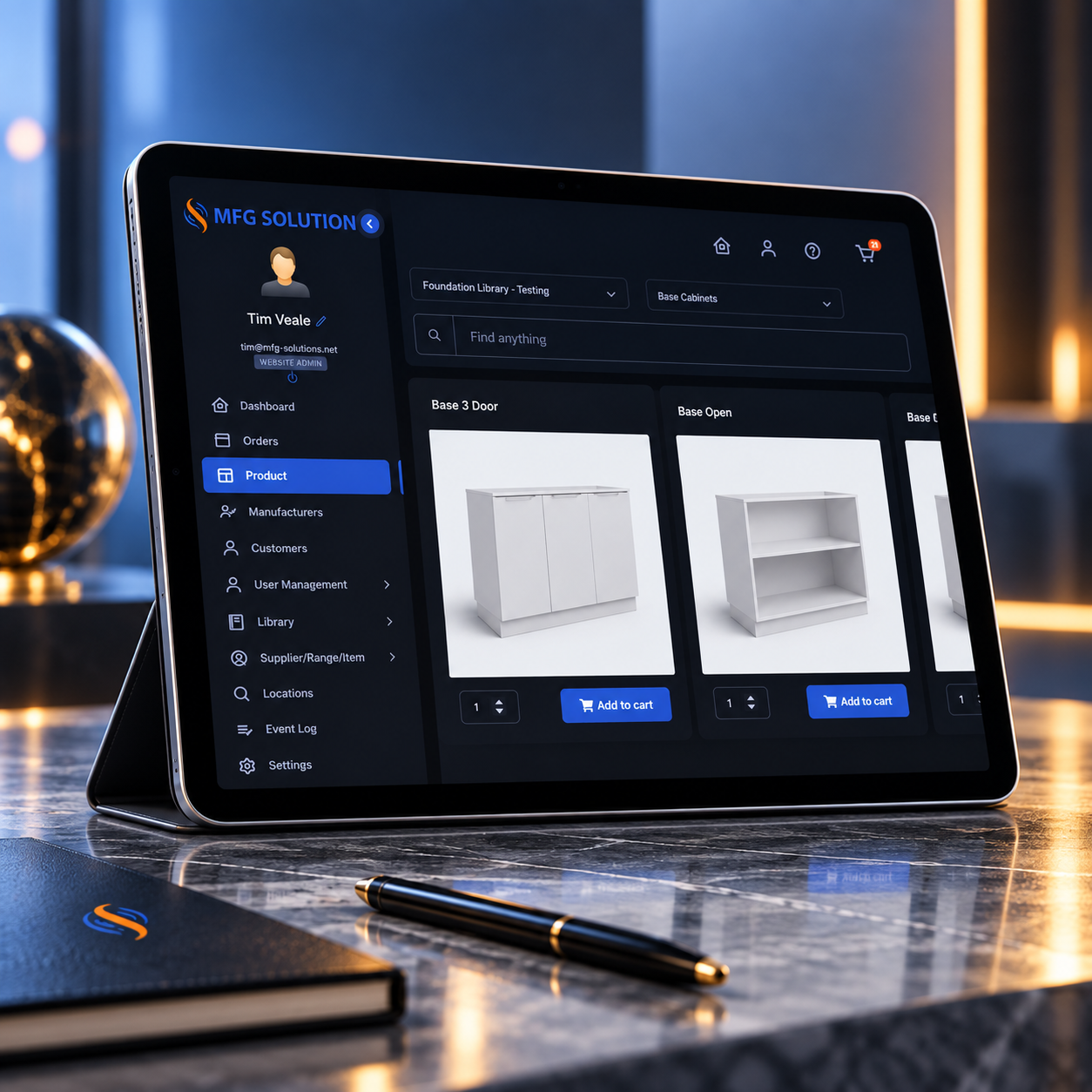
Advanced Product Management: The product management module supports the complete lifecycle of configurable furniture products through libraries, categories, products, options, option groups, product tabs, product ranges, and product styles.
Reusable Product Libraries: Administrators can create reusable libraries containing standard materials, product attributes, descriptions, specifications, options, and manufacturing information, helping maintain consistent product data while reducing repetitive entry.
Configurable Furniture Product Builder: An advanced product builder supports made-to-order furniture configuration, including width, height, and depth, minimum and maximum dimensions, inset back and cabinet void measurements, wall offsets, finished ends, product ranges and styles, construction settings, and rails, full-top, and overlay-top configurations.
Categories, Options, and Option Groups: Products can be organized into categories and enhanced with configurable options. Related choices can be combined into option groups to simplify product setup and improve consistency during order configuration.
Product Tab Management: Administrators can create reusable product tabs for details such as specifications, descriptions, reviews, FAQs, construction information, and product options. Tabs can be linked to libraries, assigned to templates or manufacturers, and organized with parent-child relationships.
Supplier and Manufacturer Management: The platform centralizes manufacturer and supplier records so administrators can manage profiles, product associations, procurement information, and operational relationships, including supplier performance and order activity.
Dedicated Supplier Portal: Suppliers receive controlled access to manage company and contact information, update profiles, view assigned orders, monitor order status, submit invoices, and access relevant product or procurement information.
Final Outcome & Impact
Centralized Operations
Configurable Products
Reusable Libraries
Consistent Specs
Supplier Self-Service
Granular Permissions
Activity Logging
Multi-Country Controls
Manufacturing businesses often rely on disconnected spreadsheets, supplier emails, product documents, and legacy systems. These fragmented workflows can create inconsistent product data, delayed orders, unclear responsibilities, and limited visibility across departments.